Lower East Side · Manhattan
Where is the fog on your Lower East Side window?
By MetroGlass Pro ·
Plan this glass project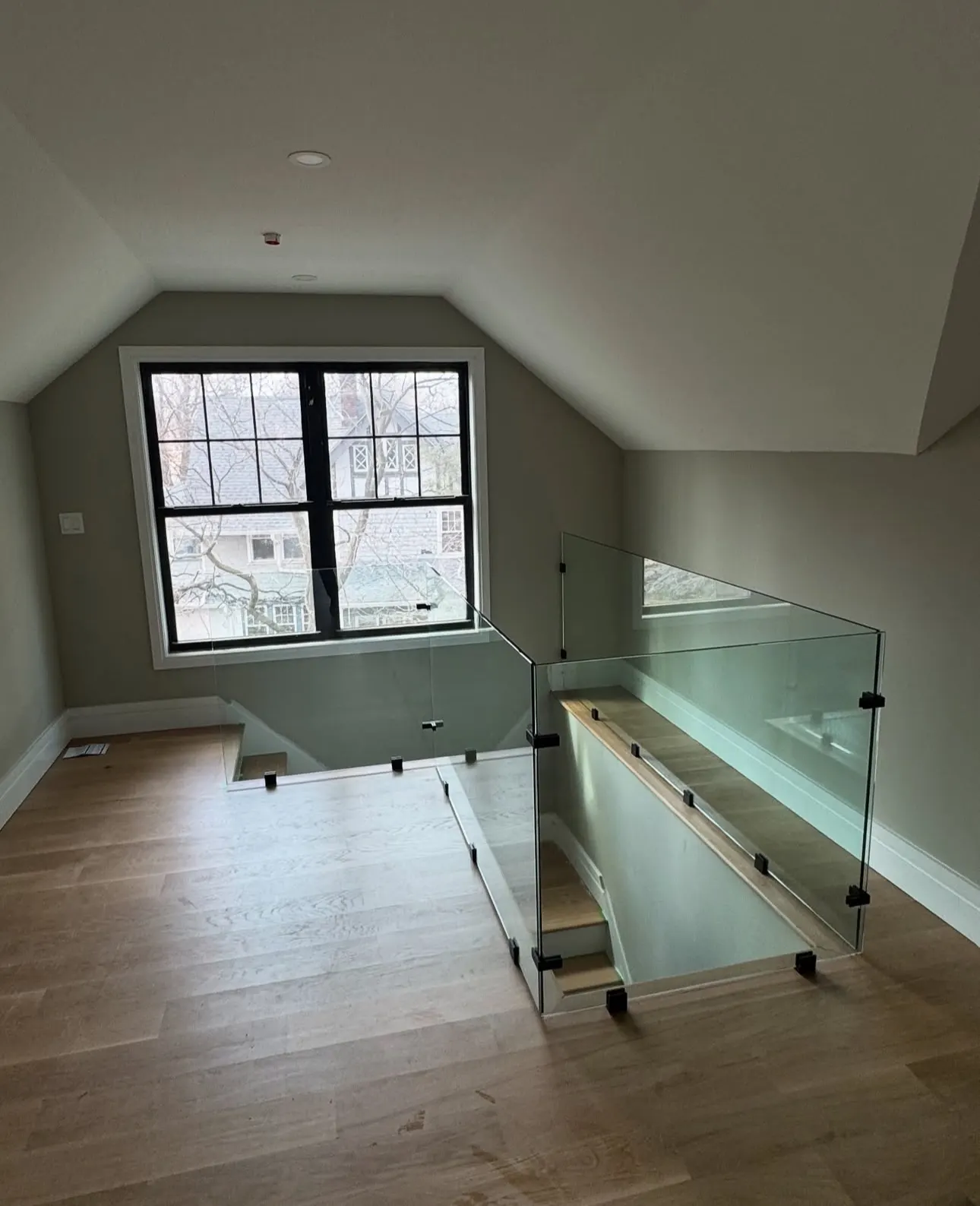
At breakfast the lower corners of the window are wet. By lunch the droplets are gone, but there is still a pale patch in the middle. Write those down as two observations. The glazier needs to know which surface you can reach and what stays cloudy after it dries.
In this gallery photo, a window divides into several visible sections beyond a clear stair guard. The rails around it give you a useful way to describe a symptom in your Lower East Side apartment: upper or lower, left or right, one section or several.
Locate the moisture, note when it changes and ask which parts of the window need inspection before choosing a replacement scope.
Record what clears and what stays cloudy
From inside the room, wipe a small area of the accessible room-side surface with a soft cloth if the glass is intact. Record what changes. Observe the outer surface from inside and leave its inspection to someone with safe access. If you can’t tell where the haze sits, label it uncertain.
Andersen describes surface condensation on both sides of windows and distinguishes it from condensation trapped within an insulating glass unit. Persistent haze between the panes of a sealed unit warrants a seal assessment. Tell the reviewer if there is a separate storm panel, since that creates another space where moisture can collect.

Give building staff the pattern, including the sill
Take a wide view of the opening and a close view of the affected section. Note time of day, recent rain, whether cooking or bathing preceded the moisture and whether adjacent windows look the same. A second photo later in the day makes the difference between a passing film and a persistent patch easier to describe.
If the sill or wall is damp, include those surfaces in the record and tell building management. Water that appears after rain at a frame joint calls for a different inspection from droplets that appear on the room-side glass. Ask which building contact should review the frame and surrounding wall before anyone prices a glass unit.
Ask which part of the assembly the quote covers
Send any visible label or manufacturer information and say whether the sash opens and closes normally. Ask the estimator to identify the glazing assembly and assess the sash and frame. If a glass unit can be changed independently, request that scope with retained parts named. If the sash or frame needs separate work, ask who should evaluate and price it.
Check access and building requirements before scheduling. A useful first request is a short condition record with the date, the affected section and any questions about moisture at the frame. It gives the glazier and building contact the same starting point.
Bring the actual room into the estimate.
For this project, useful photos show:
- Whole opening with the affected section visible
- Close view of the haze, sill and any safely visible label
- A second dated photo after the condition changes
Tell us what you need.
Just the basics. Measurements and building details can come later.