East Village · Manhattan
Keep the East Village cabinet. Choose what its glass reveals.
By MetroGlass Pro ·
Plan this glass project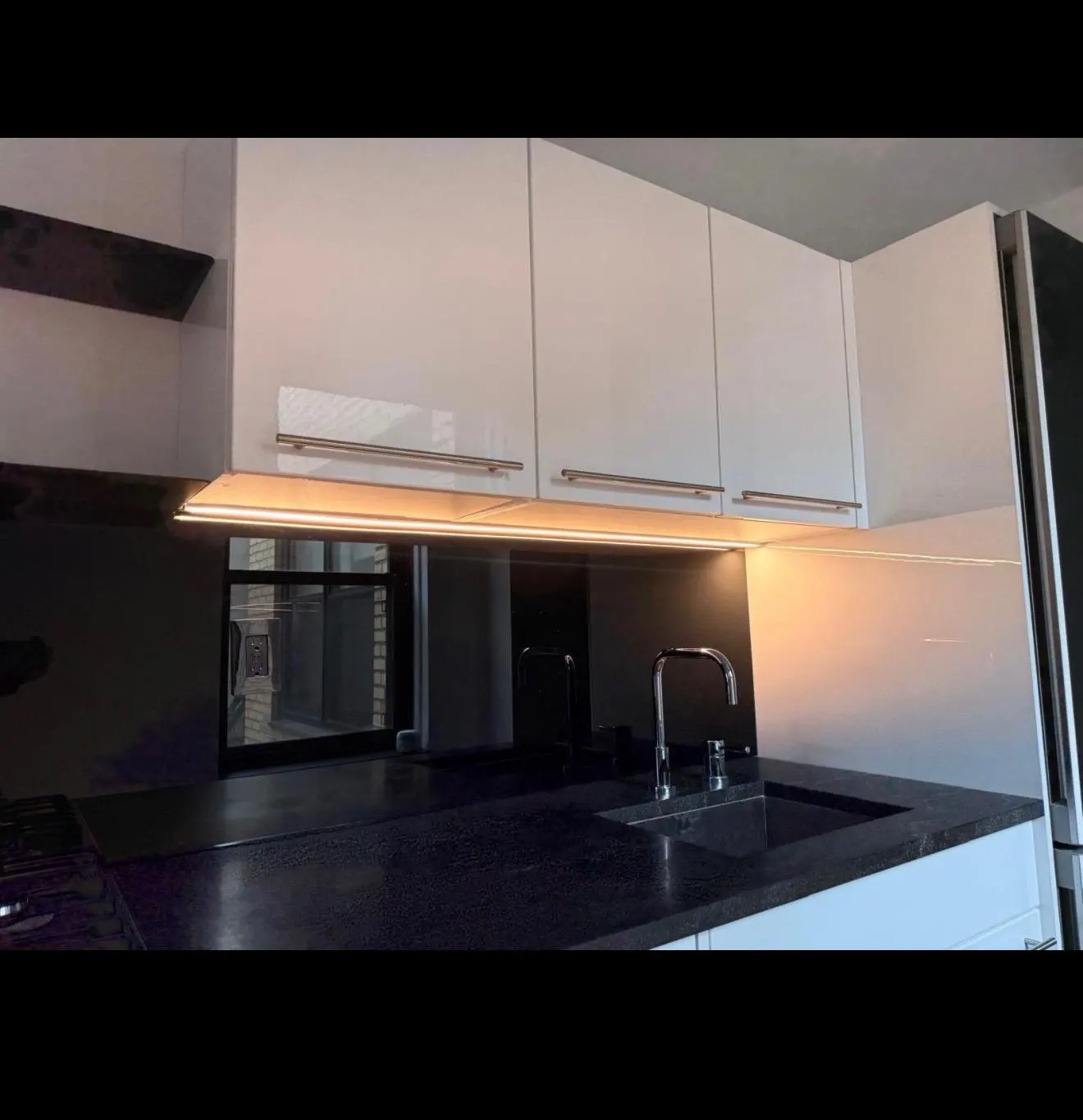
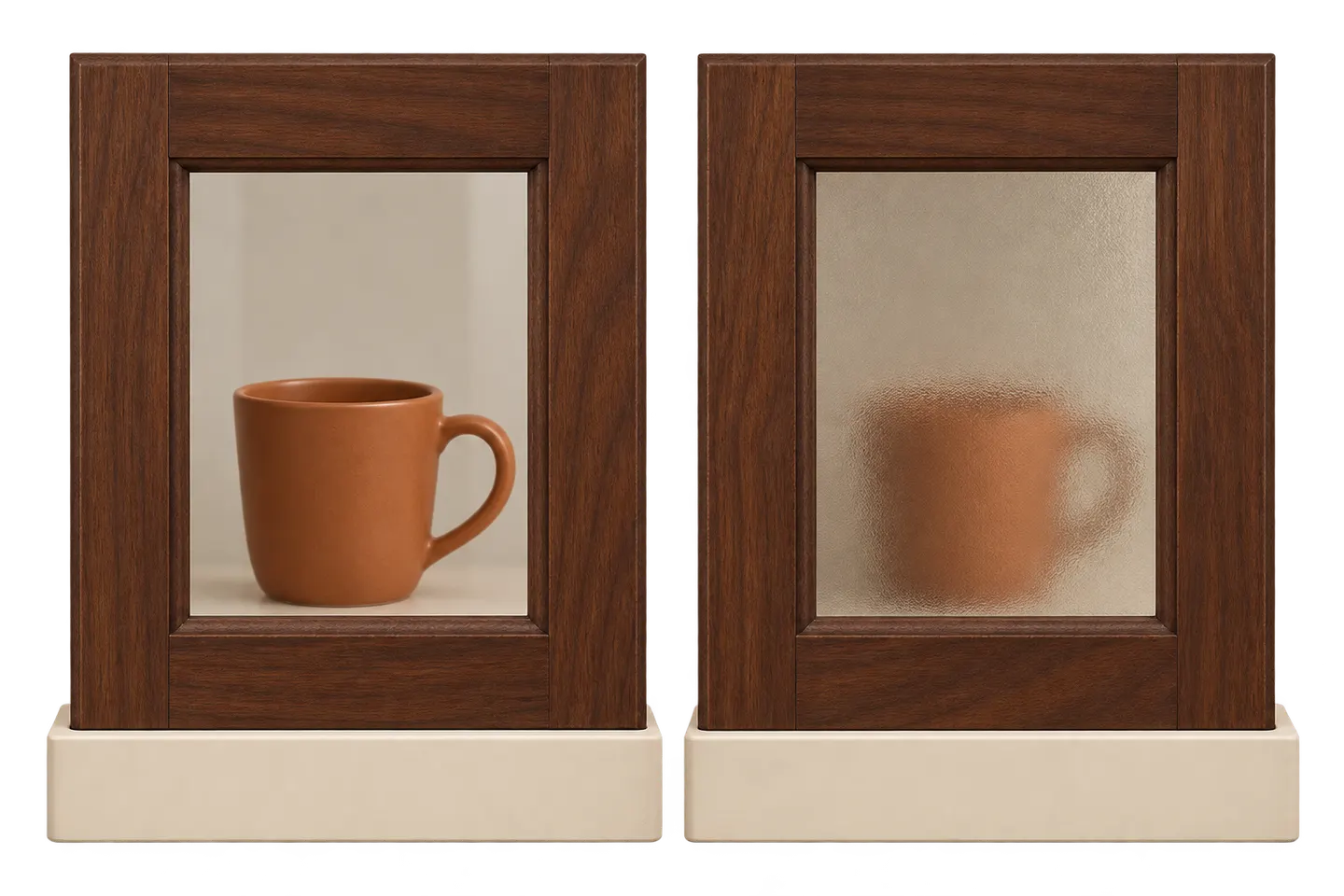
Try the glass sample with a mug right behind it. Now move the mug toward the back of the cabinet. If you wanted to hide the jumble of handles but still see a little color, those two views can tell you more than the label “frosted.”
An East Village cabinet can be worth keeping even when a pane needs replacement or the display no longer suits the room. First find out how the door is built. Then judge the glass with the actual contents and lighting. In this company photograph the under-cabinet light makes a distinct warm line, while the dark surface below reflects the window. A finish can look quite different depending on where the light falls.
Check whether the door can accept a new insert, then compare samples in the cabinet’s real light before ordering.
Look at the back of the intact door
Photograph the front and, if safely visible, the back edge of the insert. Show any retainers and the condition of the frame and hinges. An insert held by removable parts may present a different scope from glazing captured inside a door assembly. Ask who will confirm the fit and handle any frame repairs. Avoid taking the door or its glass apart to gather information.
If one pane is damaged, keep clear of it and photograph only from a safe spot. Show an adjacent intact door if there is one, especially when matching a repeating pattern or an existing tint.
Compare samples at breakfast and after dark
Hold or position a small supplier sample safely with the cabinet lights off, then with the lights on. Compare one item near the glass and one farther back. Clear glass can suit a display; patterned glass can soften the outlines. Pilkington grades its texture range by how much the pattern obscures. That scale describes that manufacturer’s collection and won’t predict the exact view in your cabinet.
For several doors, agree which way the pattern runs and whether you need to match a neighboring pane. Compare samples next to the existing wood and pulls. Ask the glazier to confirm the glass specification, edge treatment and suitability for the door before ordering.
Price the insert and any door work separately
Tell the estimator how many doors are affected and whether you want a match or a change in appearance. Ask which parts of the proposal cover removal, fitting and reinstating the retainers. List any hinge, frame or finish repair separately so you can compare an insert-only scope with work involving a cabinet specialist.
Include a rough opening size for context and leave final sizing to the installer. The useful estimate answers three questions: what stays, what gets replaced and what needs review before the new glass is made.
Bring the actual room into the estimate.
For this project, useful photos show:
- Front of the cabinet with adjacent doors in view
- Safely visible back edge or retainers on an intact door
- Existing pattern or a supplier sample with the cabinet lights on
Tell us what you need.
Just the basics. Measurements and building details can come later.