Sliding Bypass Frameless Doors: When There's No Room to Swing
February 2026
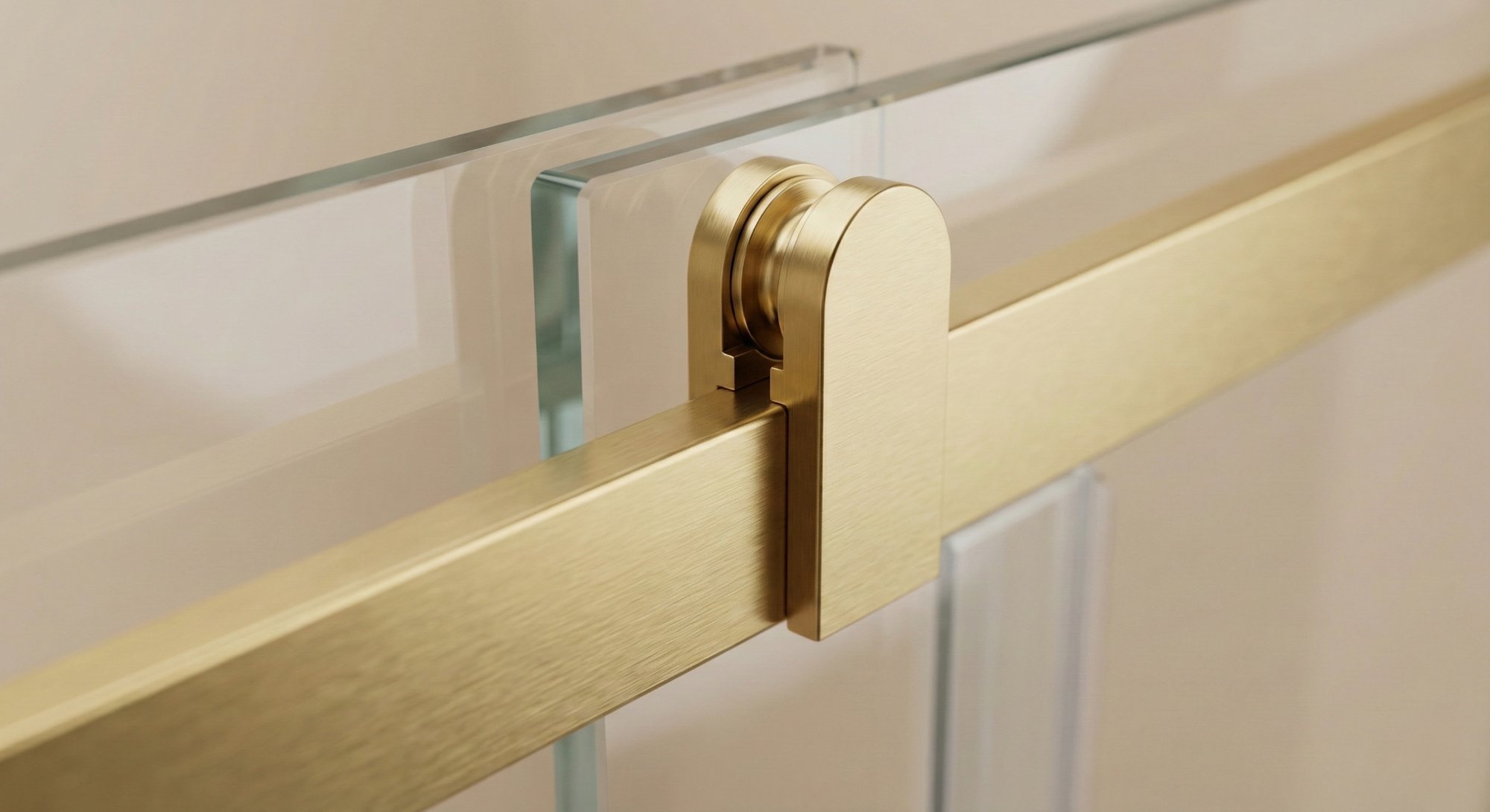
In plenty of NYC bathrooms — especially those with a shower-over-tub combo — there's simply no room for a swinging door. The toilet is right there. The vanity is right there. The bathroom door is right there. A sliding bypass system solves this completely: two glass panels on a track, one slides behind the other. Zero swing clearance needed.
Best for tub-shower combos with no swing clearance
The classic NYC scenario: a 60" bathtub with a showerhead, and the bathroom is so tight that a hinged door would slam into the toilet or vanity. This is the single most common situation where we recommend sliding bypass.
Two frameless glass panels sit on a track — typically a top-hung barn-door style system with exposed rollers and a guide rail. One panel is fixed, the other slides. The entry point shifts left or right depending on which panel you move.
The frameless version is a massive visual upgrade over the old aluminum-framed sliders that most NYC apartments still have. Those framed sliders collect grime in the tracks, develop mildew in the frame channels, and eventually get stuck or wobbly. A modern frameless bypass system eliminates most of those problems.
Frameless bypass vs framed sliders: cost comparison
A standard framed sliding shower door from a big-box store runs $200–$500 for a basic model. But the quality difference is obvious — thin glass, aluminum frames that corrode, bottom rollers that fail.
A custom frameless bypass system typically runs $1,400–$2,500 installed. The price difference comes from:
- Thicker glass: Frameless uses 3/8" tempered glass vs the 1/4" or 5/32" in framed doors. Heavier, stronger, and optically clearer.
- Better hardware: Stainless steel or brass roller systems vs cheap plastic wheels. The barn-door track hardware alone is a different class of product.
- Custom fit: Measured and fabricated to your exact tub dimensions. No shimming, no guessing, no gaps.
- No frame: The frame itself is what collects mold and corrosion. Eliminating it means a cleaner look and less maintenance over time.
For NYC homeowners planning to stay in their apartment for more than a few years — or prepping for a co-op/condo sale — the frameless upgrade pays for itself in both daily experience and resale value.
Maintenance and cleaning tips
Frameless bypass doors are lower-maintenance than framed sliders, but they're not zero-maintenance. Here's what we tell every client after install:
- Track and rollers: Wipe the track with a damp cloth monthly. If rollers start to feel sticky, a drop of silicone lubricant on each roller restores smooth operation. Do not use WD-40 — it attracts dust and grime.
- Glass: Squeegee after each shower to prevent hard water spots. NYC water is relatively soft compared to other cities, but mineral deposits still build up over time. A weekly spray of white vinegar + water (50/50) keeps glass clear.
- Bottom guide: The small guide at the bottom of the tub that keeps the sliding panel aligned — clean this out occasionally. Soap scum and hair can accumulate there.
- Silicone seals: Check the seals where glass meets the tub edge once a year. If they're peeling or discolored, a re-seal takes 15 minutes and costs almost nothing in materials.
Most of our bypass installations run for years without any service calls. The barn-door roller systems we use are commercial-grade and handle daily sliding without wear issues.
Related Services
Other Configurations
Upgrading from old framed sliders?
We remove the old and install frameless — same visit.
Get a Free Estimate